

Utility Incentives: Lack of standard industry benchmarks still a challenge
If you’re going to reward improvement, you need a baseline against which to measure it. Therein lies one of the many challenges facing refrigeration end-users seeking utility incentives for upgrades and new installations. As utilities, manufacturers and end-users work together to make newer, more energy efficient equipment more affordable through incentives, the lack of standard industry benchmarks makes the process complicated, fragmented and inconsistent. Manufacturer calculations are apples and oranges Within the refrigeration manufacturing industry, there is no uniform energy performance baseline for either CO2 or DX systems. Each manufacturer has its own set of tools for calculating energy consumption, [...]

Ease of Installation Simplifies the Path to Small-Format CO2 Refrigeration
For small-format retailers interested in making the switch to natural CO2 refrigeration, their options just got considerably more appealing. AdvansorFlex, the latest addition to Hillphoenix’s evolving Advansor CO2 platform, is engineered to ensure straightforward installation and smooth operation from day one. Whether part of a new store construction or a remodels, the installation of refrigeration equipment is a major consideration in terms of project costs, feasibility, and completion time—particularly when minimizing downtime is part of the equation. With AdvansorFlex, scalability and ease of installation now go hand-in-hand. Less Onsite Prep Every feature of the AdvansorFlex CO2 system is designed with [...]

Natural Refrigeration for Convenience Stores Guide
By Keilly Witman KW Refrigerant Management Strategy LLC Convenience stores and drugstores have long had the luxury of being blissfully unaware of refrigerant environmental regulations. Historically, most retailers in this sector were able to meet their refrigeration needs with self-contained refrigeration equipment that uses less than 50 pounds of refrigerant, meaning that most of the EPA’s Section 608 regulations did not apply. Some larger convenience stores or other stores with slightly greater refrigeration needs may have used cool rooms and single condensing units, but overall, it was uncommon to hear of a convenience store with a full refrigeration system. But [...]
Small-format stores capitalize on “fresh” opportunities to boost sales
By Margie Proctor Hillphoenix Marketing & Design Specialist Whether they’re stopping at Starbucks or a convenience store, Americans increasingly want fresh options. The desire for fresh and healthy foods runs the gamut from snacks to ready-made meals. Just look at the research: 78% of consumers are on a mission to eat more fresh and fewer processed foods, according to the 2014 Gallup Study of Cooking Knowledge & Skills. “Health” to consumers now is more about food purity than traditional dieting, and they are eating more fresh foods, reports global information company The NPD Group. Fresh-format retail sales are growing 12% [...]

Securing Energy Incentives Isn’t a DIY Endeavor for Supermarkets
By Leigha Joyal Energy Analyst, Hillphoenix Food retail is among the most electricity intensive commercial enterprises, and store owners want to reduce their consumption and their bills. Utilities want to see that happen, too. Containing consumption is more cost effective for utilities than expanding the electric grid. That’s why they have incentive programs that defray some of the costs of adopting energy-efficient technologies. This, at least in theory, is a win for everyone. But in practice, it’s not always a win for food retailers. The energy incentives landscape Navigating the incentives terrain takes an investment of time, manpower, and even [...]
The Future for Naturals is Now: Utility Incentive Success Stories
By Keilly Witman KW Refrigerant Management Strategy LLC Much has been written over the past few months about the potential for utility incentives based on natural refrigerant use in supermarkets. The word “potential,” as well as the nature of the articles, suggests that utility incentives for naturals are a thing of the future. Not so! There are plenty of examples of successful incentive projects for stores that use natural refrigeration systems. The discussion about utility incentives for naturals normally centers around how our industry can get utilities to adapt their existing incentive programs to better fit the world of natural [...]
Anti-Sweat Control that Makes Sense and Saves Money
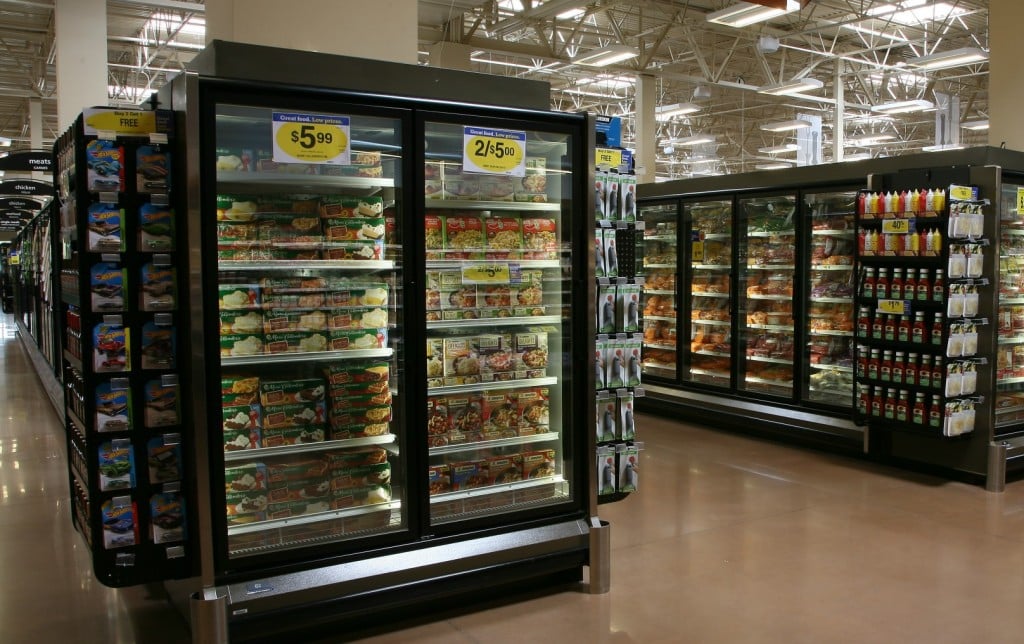
By Jonathan Tan, VP Energy Services The AMS Group Did you ever think about how much heat there might be in your frozen food aisles? There could be heat on the door glass, the frames around the glass, and the frames on the cases. The heat prevents moisture from forming on the glass and frames – which is essential. But did you know heat is needed only a fraction of the time to be effective? Yet many stores still have uncontrolled heat, which operates all day, every day. This is wasted electricity – and money – in the form of [...]
No-Heat Freezer Doors? No Sweat!
By Jonathan Tan, VP Energy Services The AMS Group Food stores are complex. What it takes to merchandise effectively, on one hand, and operate efficiently, on the other, can be at odds with each other. Heated cooler and freezer doors are a perfect example. Preventing condensation, or sweating, on low-temperature case doors is a must for merchandising and a good customer experience. Using heat to do it, however, has a significant downside for efficient operations. The problem with heated doors Put simply, heated doors are expensive to operate. In addition to the energy it takes to prevent condensation, refrigeration loads [...]
Evaporator Fan Retrofits Do More Than Save Energy
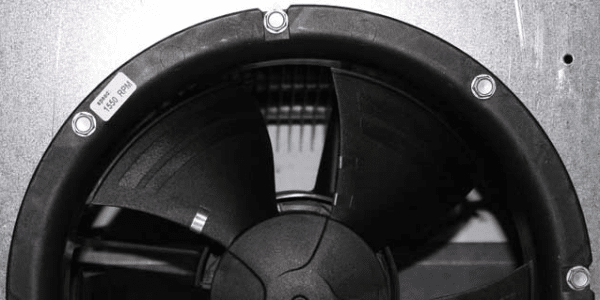
By Jonathan Tan, VP Energy Services The AMS Group, Hillphoenix Electronically commutated (EC) motors have been an alternative to induction (shaded pole and permanent split capacitor) motors in evaporator fans for the past decade. Although EC motors can reduce energy consumption by as much as 65 percent compared with its predecessors, the higher cost of the technology – and longer payback period – has hindered significant adoption in the supermarket space. But as with most new technologies it’s only a matter of time until the price comes down, and EC motors are now essentially standard on evaporator fans in new [...]
Video: Coolgenix versus other conduction cooling cases
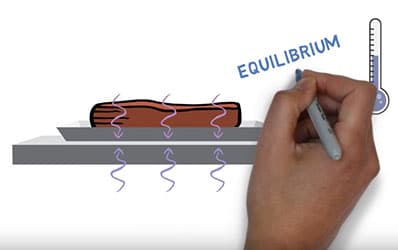
Only Coolgenix deck pans use pulse flow control technology to maintain natural moisture levels and preserve the integrity of meat and seafood. Other conduction cooling cases claim to work like Coolgenix, but they don’t. Protect the integrity of your meat and seafood with the only conduction cooling case that actually maintains natural humidity and prevents shrink.

